Loading...
Peak Shaving ESS Optimal Control
Peak Shaving ESS Optimal Control
AI-based Peak Power Reduction ESS Optimal Control System
AI learns building and factory power usage patterns to precisely predict peak times and optimally control ESS charge/discharge schedules. Significantly reduces demand charges and efficiently manages contracted power capacity.
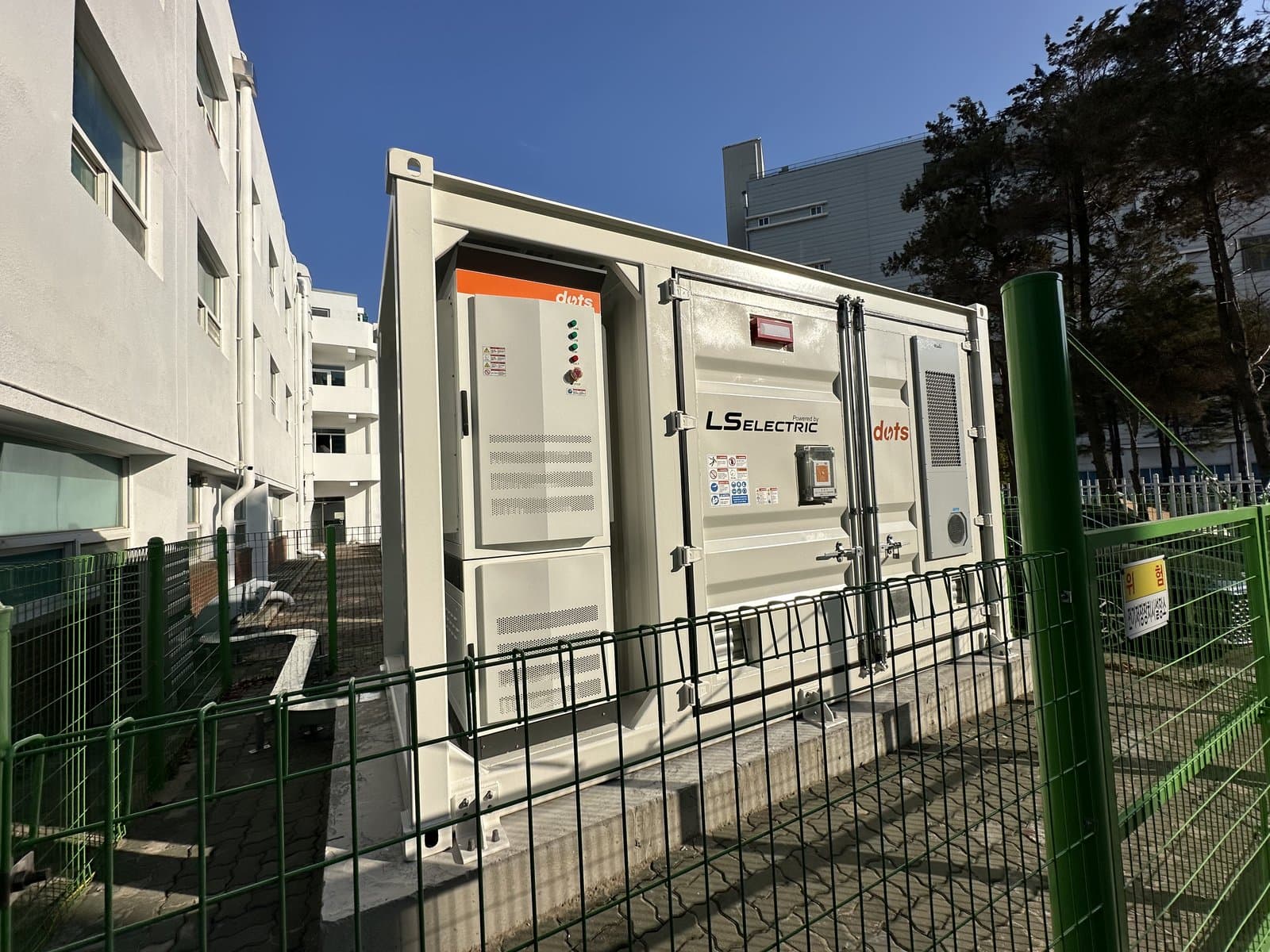
Background
In industrial and commercial electricity tariffs, the basic charge (demand charge) is determined by the monthly maximum peak power. Since a brief peak moment determines the entire month's basic charge, peak management is the key to electricity cost reduction.
High Demand Charge Ratio
Demand charges account for 30-40% of industrial electricity bills, determined by the 15-minute monthly peak.
Inefficient Contracted Power
Many facilities maintain higher contracted power than needed to prepare for peaks, paying unnecessary basic charges.
Limitations of Manual Control
Conventional ESS operates on fixed schedules, failing to respond to varying load patterns with limited peak reduction effect.
Policy Background
According to the 10th Basic Plan for Electricity Supply and Demand, the required capacity for peak shaving ESS in the metropolitan area is projected to grow significantly to 2,100MW by 2036. However, there is currently no plan for demand-side ESS utilization in the metropolitan area.
| 2024 | 2028 | 2029 | 2030 | 2036 |
|---|---|---|---|---|
| 126MW | 440MW | 559MW | 699MW | 2,100MW |
* Source: 10th Basic Plan for Electricity Supply and Demand
Market Status
The demand-side ESS market has slowed since the special tariff expiration in 2019, and the compliance rate for mandatory public institution ESS installation remains low.
18%
Nationwide public institution ESS mandate compliance (88 of 502 institutions)
24%
Gyeonggi Province compliance rate (17 of 70 institutions)
주요 이슈
- 1New installations ceased after special discount expiration (2019) and safety measure tightening
- 2Difficulty securing budgets and high initial investment costs
- 3Fire safety concerns and safety management burden
- 4Low utilization rates of installed ESS due to lack of operational expertise
Solution Overview
Ninewatt's Peak Shaving ESS Optimal Control System combines AI prediction models with a real-time optimization engine to automatically control ESS charge/discharge.
AI Load Prediction
Deep learning-based 15-minute power demand forecasting. Enhances accuracy by reflecting weather, day of week, season and other variables.
Optimal Charge/Discharge Scheduling
Optimizes ESS charge/discharge timing and output based on predicted load profiles to minimize peaks.
Real-time Adaptive Control
Monitors real-time power data and corrects prediction-actual gaps, immediately responding to unexpected peaks.
How It Works
1
Data Collection
Collects 15-minute power usage, weather data, and operational schedules for AI model training.
2
Peak Prediction
Predicts next 24-hour power demand in 15-minute intervals, calculating peak timing and magnitude.
3
Optimal Schedule Generation
Automatically generates optimal charge/discharge schedules considering peak reduction targets, ESS capacity, and SoC.
4
Real-time Control
Automatically controls ESS per generated schedule while dynamically adjusting for real-time load variations.
Benefits
15~30%
Demand charge reduction
10~20%
Contracted power optimization
95%+
Peak prediction accuracy
24/7
Automated operation & monitoring
Target Applications
Applicable to various facilities requiring peak power management.
Manufacturing
Controls sudden load variations and peaks from production processes.
Large Commercial Facilities
Manages peaks in department stores, hypermarkets and other HVAC-heavy facilities.
Public Buildings
Contributes to public building energy efficiency and electricity cost reduction.
Data Centers
Optimally controls IT load and cooling system peaks.
Integration with Shared ESS
Peak shaving ESS optimal control technology is not only an independent solution, but also operates as a core function in Ninewatt's Shared ESS business. Shared ESS connects a single large-capacity ESS to the distribution grid, enabling multiple buildings to share peak reduction benefits through virtual net metering.
Multi-building Peak Management
Shared ESS AI optimal control analyzes and simultaneously manages peak times across multiple subscribers.
Virtual Net Metering Cost Savings
Without physically installing ESS, buildings receive electricity cost savings through Shared ESS charge/discharge.
Grid Flexibility Supply
Provides peak reduction during normal operations and grid stabilization during emergencies, generating additional revenue.
Learn about Peak Shaving ESS Optimal Control
Reduce demand charges and optimize power operations with AI-based ESS optimal control.