Loading...
Shared ESS
Shared ESS
Shared ESS — Grid Flexibility Resource
A new ESS business model that connects large-scale energy storage to the distribution grid at a single site, enabling multiple remote consumers to benefit from electricity cost savings through virtual net metering while providing grid stabilization when needed.
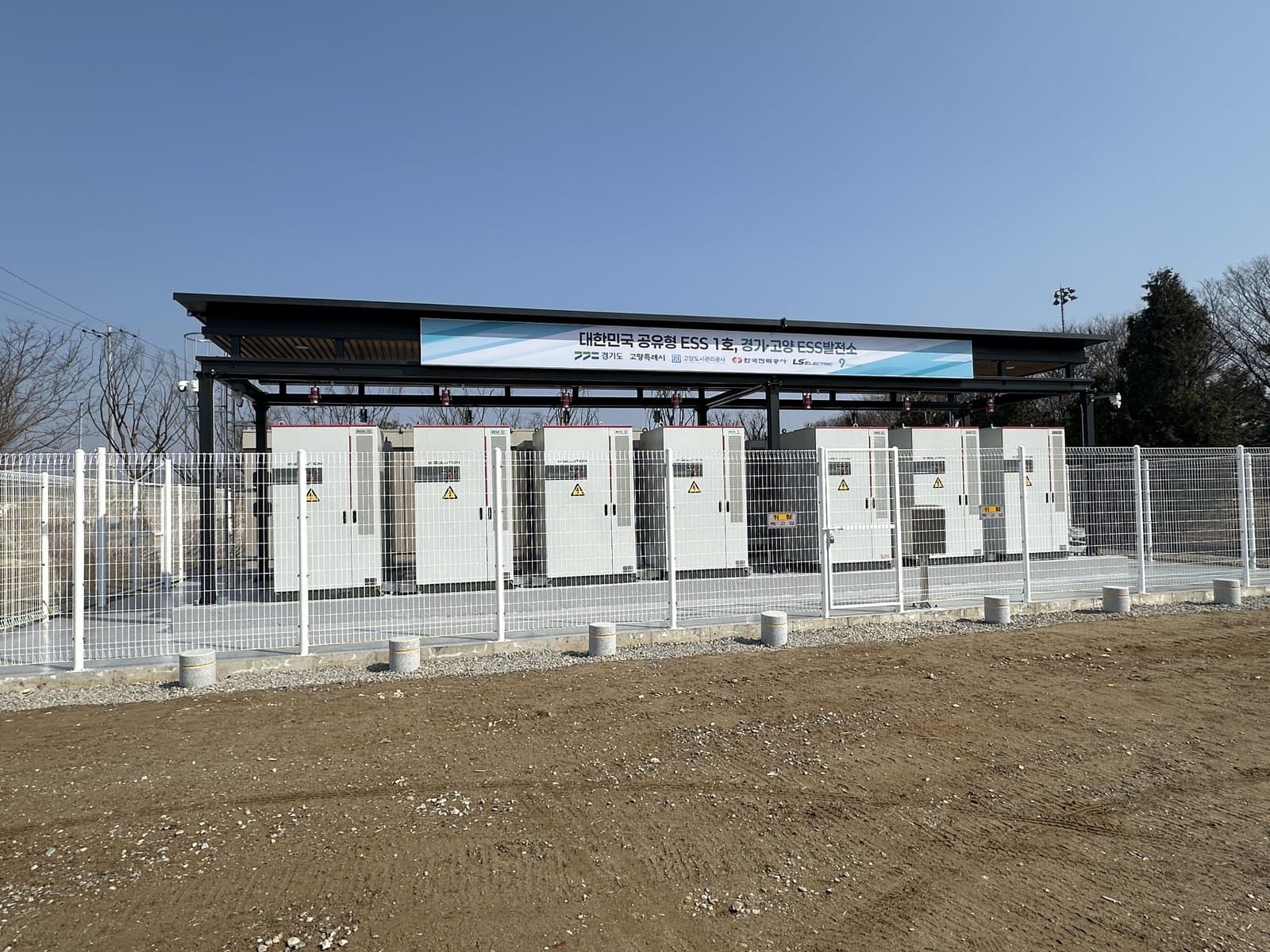
Background
The Seoul metropolitan area (Gyeonggi Province) faces insufficient power supply relative to high electricity demand, and grid expansion is difficult due to public acceptance issues. Demand-side ESS deployment has stalled due to lack of policies and low economic viability.
Concentrated power demand
Gyeonggi Yongin cluster alone forecasts 14.7GW demand by 2053. National peak demand expected to reach 202.0GW by 2051
Grid expansion difficulties
Major transmission line construction delayed 66–150 months due to public acceptance issues
Lack of demand-side ESS
New installation market disappeared after special rate expiration in 2019. Utilization of existing ESS also remains low
Peak Shaving ESS Required Capacity Forecast
According to the 10th Basic Plan for Electricity Supply and Demand, the required capacity for peak shaving ESS to reduce metropolitan area peak power demand is projected to increase continuously.
| 2024 | 2028 | 2029 | 2030 | 2036 |
|---|---|---|---|---|
| 126MW | 440MW | 559MW | 699MW | 2,100MW |
* Source: 10th Basic Plan for Electricity Supply and Demand
What is Shared ESS?
A new ESS business model that connects large-scale energy storage to the distribution grid at a single site, enabling multiple remote consumers to receive electricity cost savings through virtual net metering while providing grid stabilization as needed
Flexibility Supply
Provides power resources when distribution grid stabilization is needed
Enhanced Acceptance
Fire prevention and reduced operating costs through professional operator management
Improved Profitability
Participation in various revenue markets including virtual net metering, NWAs benefits, and VPP
Individual ESS vs. Shared ESS
| Category | Individual Building ESS | Shared ESS |
|---|---|---|
| Installation location | Inside building | Outside building, near distribution lines |
| Initial investment | High — individual building batteries and construction costs | Low — bulk battery purchase and single-site construction |
| Revenue generation | Low — only basic rate and energy savings | High — rate savings + flexibility provision during line overload |
| Payback period | ~27 years (100kWh basis: ₩100M investment, ₩3.7M annual revenue) | ~13 years (100kWh basis: ₩65M investment, ₩6.11M annual revenue) |
| O&M | On-site staff management, difficult without experts | Professional ESS operator maintenance, cost reduction and expertise |
| Future BM | Difficult to expand | DR, VPP, stored electricity sales and more |
Operation Plan
Normal Operation — Virtual Net Metering
- 1Recruit consumers and analyze power patterns
- 2Sign shared ESS subscription contract (ESS operator ↔ consumer)
- 3Pattern-based ESS charge/discharge control
- 4Bill subscription fee based on savings (ESS operator → customer)
Grid Flexibility Supply
- 1Analyze distribution grid load patterns
- 2Sign flexibility supply contract (ESS operator ↔ grid operator)
- 3Execute dispatch orders and supply
- 4Settlement and compensation for supply performance (NWAs)
Non-Wires Alternatives (NWAs)
A compensation system that pays operators who provide technology to replace or defer new distribution line construction under short-term, intermittent conditions, covering costs for the period the line construction was avoided or delayed.
Virtual Net Metering (VNM)
Customers benefit from electricity cost savings without owning ESS equipment — charge/discharge power from ESS installed at a third-party site is allocated and offset by time period, providing equivalent rate reduction effects.
Project Overview
Shared ESS Construction and Virtual Net Metering Transaction Demonstration for Metropolitan Distribution Grid Flexibility
Participants: Goyang Urban Management Corp. (57%), Ninewatt (43%)
Project Goals
- 1.Reduce electricity costs for consumers (buildings) through virtual net metering during normal operation
- 2.Demonstrate public institution ESS installation obligation compliance through virtual net metering
- 3.Revenue from distribution line reinforcement avoidance through grid stabilization contribution
Construction Details
H/W 구축
ESS 0.25MW/1MWh + ESS 1MW/4MWh construction
S/W 구축
ESS optimal operation algorithm development, virtual net metering settlement system development
Demonstration Alliance
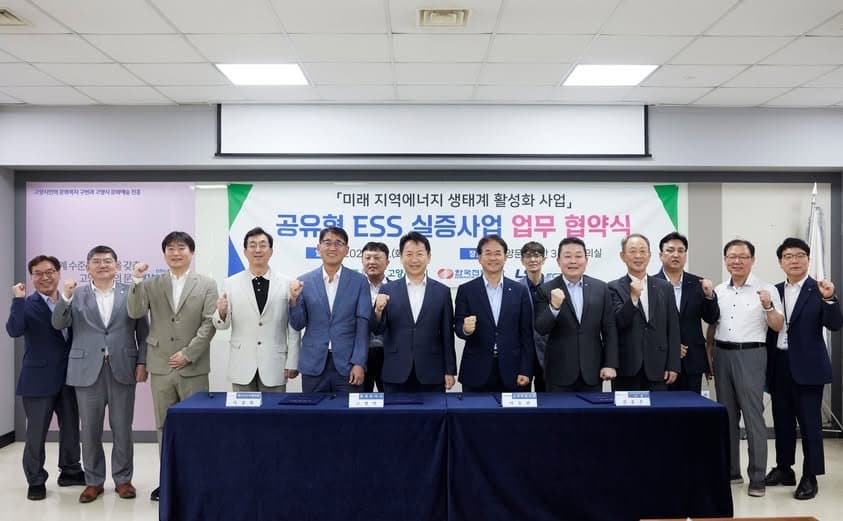
A public-private integrated demonstration alliance has been formed to verify the entire process of shared ESS technology, regulation, and operation.
Gyeonggi Province
Lead local government
- ·Active administrative support and inter-department cooperation
- ·Distributed energy activation policy development
- ·ESS expansion strategy for provincial public institutions
Goyang Special City
Lead local government
- ·Administrative permit support for demonstration sites
- ·Public land provision coordination
- ·Community acceptance and conflict prevention
KEPCO
Grid operator
- ·Virtual net metering platform development and operation
- ·Flexible resource benefit compensation system design
- ·Overloaded line selection and dispatch cooperation
Goyang Urban Management Corp.
Shared ESS equity investor
- ·ESS construction site management and quality inspection
- ·ESS inspection and safety management
- ·ESS incident response system
LS Electric
Technical advisory
- ·ESS operation and safety management expertise
- ·Dispatch response logic advancement
- ·ESS monitoring and accident prevention advisory
Ninewatt
Project lead
- ·ESS management platform development
- ·Demonstration project execution
- ·Consumer recruitment and subscription service model design
Project Timeline
Gyeonggi Province and Goyang Special City launched the Shared ESS project in September 2024, establishing plans to build two Shared ESS sites (1MWh and 4MWh).
'24.05
Business Model Planning
Shared ESS business model planning and launch of local government collaboration
'24.09
Demand Survey & Funding
Demand survey for Shared ESS participation across provincial cities and budget planning
'25.01
Consortium Formation
Formation of public-private consortium and completion of feasibility review
'25.04
National Funding Secured
Selected for MOTIE competitive grant, securing additional national funding for 4MWh ESS
'25.07
Construction Begins
ESS installation site selected and construction commenced
Funding Secured
Pre-emptively secured provincial and city funding for 1MWh ESS construction, then strategically attracted additional national funding from MOTIE for 4MWh ESS expansion.
Provincial Subsidy
Gyeonggi Smart ESS Installation Support
출연기관Gyeonggi Province
참여기관Goyang Special City, Goyang Urban Management Corp.
사업내용PCS 250kW, Battery 1MWh construction
설치장소Public site in Goyang Special City
Competitive Grant
2025 Future Regional Energy Ecosystem Activation
출연기관Ministry of Trade, Industry and Energy (MOTIE)
참여기관(Local gov.) Gyeonggi Province, Goyang Special City / (Corp.) Goyang Urban Management Corp., Ninewatt
사업내용PCS 1MW, Battery 4MWh construction + Virtual net metering & NWAs system development
설치장소Public site in Goyang Special City
Expected Impact
~40%
Initial investment cost reduction
13 yrs
Payback period (half of individual ESS)
5MWh
Phase 1 ESS installation scale
Expected Outcomes by Stakeholder
Government & Grid Operators
- ·Reduced social costs from delayed grid construction
- ·Contribution to ESS peak demand management targets (863MW by 2031)
- ·Increased national power grid reliability
Gyeonggi Province & Goyang City
- ·Resolution of regional conflicts from substation and grid construction
- ·Improved public institution ESS mandate compliance and reduced operational burden
- ·Reduced site and operational management burden through Shared ESS
Enterprises
- ·(Operators) Global competitiveness through new ESS business model development
- ·(Service users) Electricity cost savings through participation
Expansion Roadmap
Phase 1 ('25)
Infrastructure & Institutionalization
- ·Install 5MWh shared ESS
- ·Build real-time operation control system
- ·Improve public institution ESS mandate acceptance
- ·Establish NWAs settlement criteria
Phase 2 ('26)
Demonstration
141MWh (~₩70B)
- ·Demonstrate shared ESS subscription service
- ·Demonstrate ESS mandate compliance via virtual net metering
- ·Demonstrate grid-linked flexibility supply
- ·Establish revenue model foundation
Phase 3 ('27~)
Expansion
6,300MWh (~₩3T)
- ·Prioritize metropolitan overloaded lines
- ·Provide operation guides for expansion to other cities
- ·Attract private ESS operators through market opening
- ·Build standard model for shared ESS expansion
Want to learn more about Shared ESS?
We provide detailed consultation on shared ESS construction and virtual net metering transaction demonstration.